What an LS Swap Actually Takes (and Why the Wiring Decides Whether It Drives)
The engine is the easy half of an LS swap. The wiring and the tuning are what make it actually drive.
September 21, 2026 · 3 min read
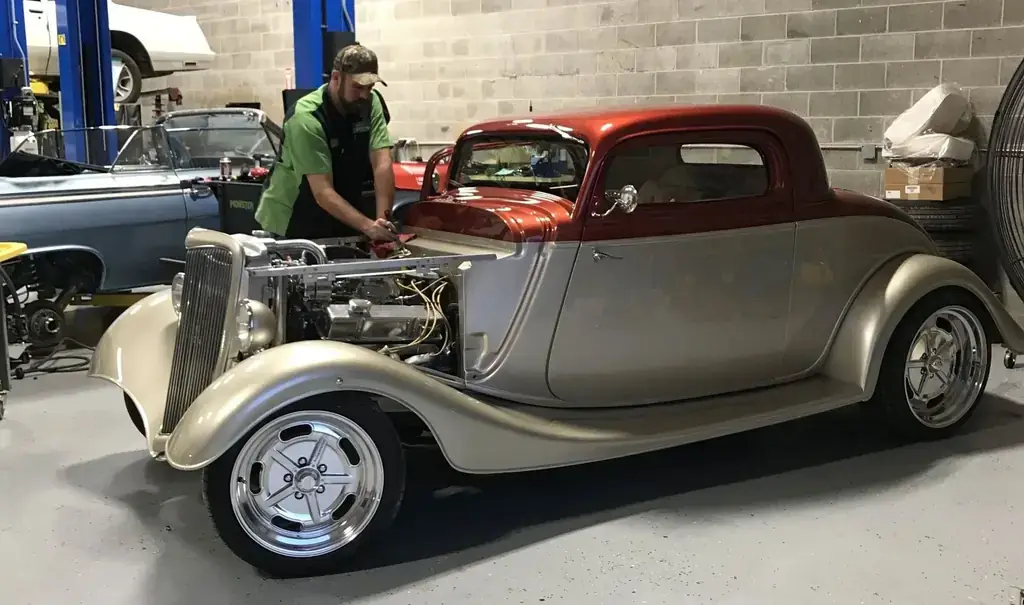
An LS swap sounds simple when you say it out loud: pull the old engine, drop in an LS, done. Anyone who's actually done one, or watched someone do one badly, knows that's not close to the real job. The engine going into the bay is genuinely the easy half. What decides whether the finished car starts reliably, idles right, and doesn't throw a check engine light every cold morning is everything around the engine, mostly the wiring and the computer that runs it.
Why the harness is where projects go wrong
An LS engine comes out of a factory car with a wiring harness built for that car's computer, its sensors, its transmission, its anti theft system. None of that maps directly onto whatever you're dropping it into. Building or adapting a harness that talks correctly to the engine's own computer, without leaving half a dozen sensors unplugged or fighting a factory security system that thinks the engine's been stolen, is where a lot of driveway swaps stall out for months. It's custom wiring work, not bolt-in work.
GM computer programming and tuning
Once the wiring is actually right, the engine's computer still has to be programmed and tuned for the car it's now sitting in: different weight, different gearing, different exhaust, sometimes a different transmission entirely. A swap that's wired correctly but never properly tuned will run, technically, but it'll run rough, waste fuel, and won't make the power it's capable of. This is the part of the job that separates a car that starts and idles from a car that actually drives the way it should.
The rest of the build
Lug Nutz handles the full range of custom work that tends to come alongside a swap: suspension upgrades and performance upgrades to match the new power, AC install so the car's still livable day to day, and the smaller stuff, a nitrous purge kit or a flame thrower for the shows, if that's the direction a project's headed. Hot rods are genuinely the shop's specialty, not a side offering. It's built into how the shop describes its own values, right down to naming originality and dependability as two of the things they build around.
- LS engine swaps and GM computer programming and tuning
- Custom wiring and electrical diagnostics for the swap
- Suspension and performance upgrades to match the new power
- AC install, nitrous purge kits, and other custom builds
Cooling, transmission, and the parts nobody thinks about first
An LS makes more heat and more power than most of what's coming out of the bay, which means the radiator, fan, and hoses that worked fine on the old engine are often the next thing to reconsider, especially on a car headed for regular street driving instead of just weekend shows. The transmission matters just as much as the engine. Whatever's bolted up behind it, factory or swapped, has to be matched to the LS's output and, on an automatic, often needs its own controller wired in and configured alongside the engine's computer. Skipping that step is a common reason a freshly swapped car shifts rough or not at all.
None of that has to happen all at once. A lot of real projects get planned in stages, engine and wiring first, cooling and drivetrain matched to it, then the performance upgrades layered on once the car is actually reliable to drive. Talking through that order up front is usually what keeps a build from stalling halfway with a car that runs but isn't finished.
Every swap is a little different depending on what's already sitting in the engine bay and what the car's actually going to be used for, a weekend cruiser versus a daily driver changes the priority list. That's exactly why a walk-around conversation before any wrench turns matters more on a project like this than on a routine repair, where the fix is usually the same for every car that comes through the door.
If there's a project sitting in a garage, or a plan that's still just an idea, the way to start is a conversation, not a parts order. Matt takes the time to talk through a project before anything gets touched: what it needs, what order makes sense, and where the money's best spent first. Call (404) 372-5069 and ask for Matt, or stop by 401A Old Mill Road in Cartersville. The shop also gives you real options on parts prices and payment plans rather than one take it or leave it number.
Lug Nutz Automotive, (404) 372-5069
Call (404) 372-5069More articles
What Your Brakes Are Actually Telling You
The three complaints Lug Nutz hears most about brakes, and what to do about each one before it gets expensive.
Why Your AC Picks the Hottest Week of the Year to Quit
A recharge fixes a low system. It doesn't fix a dead compressor. Here's how to tell which one you have.